
This is an old revision of the document!
Salamander, Greater: an amphibian preferring warm to temperate climates, and ranging from wetland to desert regions. A greater salamander averages three meters, nose to tail, but have been recorded as large as eight. Extremely fireproof, these creatures exude a highly flammable mucous that they seem to be able to ignite at will. This slime is highly valued by alchemists.
Salamander, Lesser: a wetland dwelling amphibian ranging in two to three meters, and built like a monitor lizard. Lesser salamanders do not themselves generate fire, though they are highly fire resistant. They do however produce copious amounts of methane gas in their digestive tract, which they release when threatened or hunting. This in turn attracts pyreflies, and shortly thereafter, explosions.
Sandtrap: Legend tells of an exceptionally foolish adventurer who found a Spring of the Mist in some ruins in the EastFyre Desert, and stuck his head in. For his troubles, he was transformed into the first of the Sandtraps: barely sentient hermaphroditic ant-lion-taurs with a penchant for injecting eggs into the innards of their victims and sending them on their way. If you're lucky, they'll use the existing aperture to do this.
Sathar: also known as burrowing hydras. Resembling a one-to-two ton earthworm with three heads, these creatures are toxic if ingested, have corrosive saliva, three tongues per head, and use sufficient suction to consume their prey that they can suck out your internal organs through your navel. And can regrow most missing body parts in a day, sometimes leading to you having two or more Sathar to deal with the next day.
Sea Bogey: Proof the Sea God got severely drunk at some point in his “artistic sea-life crafting” phase. These bizarre amphibious creatures are eight-foot tall bipeds, covered with lavender shaggy fur, have stocky bird legs, a vertical mouth on their front torso, faces like rigid terror masks, and a growth atop their heads that looks like they're wearing a jellyfish for a hat. Viewing them at close range causes Mind damage, which they can deliberately project as an attack, plus they can drain life energy in hand-to-hand with their multi-tentacled arms. Oh, by the way, they flock, and prefer eating people's children.
Serpent, Giant: Any snake taller than your knees when laying flat. Fortunately, as with real world large snakes, giant serpents are all constrictors. Except the talking ones: those tend to venomous, and have grudges against other epic creatures, frequently dragons, drakes, and Sun Giants.
Serpent, Randall's: A giant snake with a comparatively short and stocky body, and the head of a Tyrannosaurus Rex. Neither venomous nor a constrictor, Randall's Serpents are highly effective eating machines that are well adapted to man-made corridors and the passages of the Underdark.
Shark: Overall category for the the most effective general ocean predator the gods ever came up with. There may be more situationally terrifying beasts out there, but no one argues against the effectiveness of a one to five meter torpedo with razor teeth, tracking scent, spatial awareness, and occasionally camouflage powers.
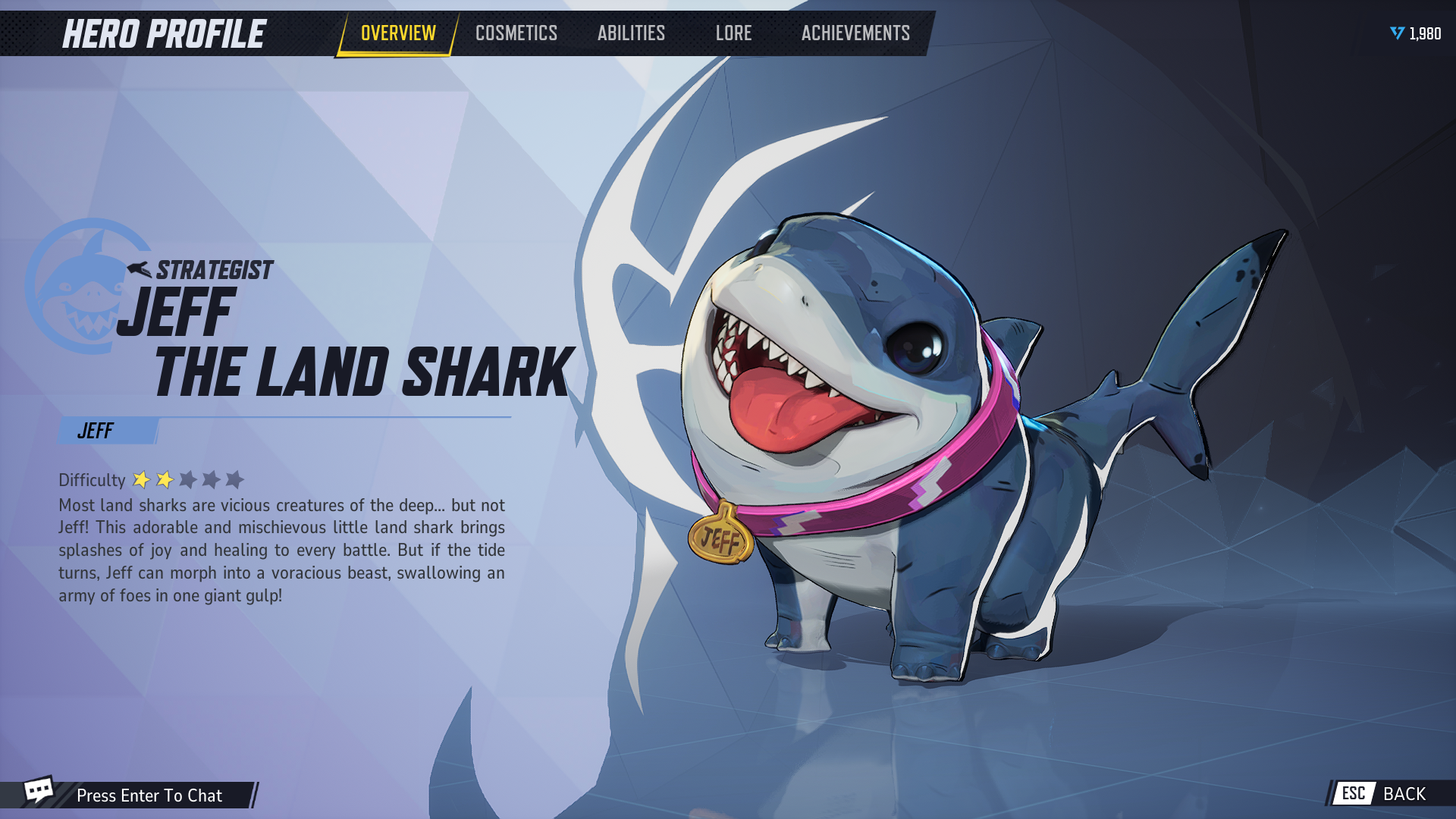
Shark, Land: An amphibious shark, with four dinosaur-like legs instead of side fins. Rarely get more than two meters long, and frequently sought out by water mages and aquatic beastmasters as companions. Otherwise, well, SHARK!
Sheep: Wool. Mutton. Bad jokes about shepherds.
Shoushou: Demons who have been bound into weapons. The Order of the Shoushou Knights is the major modern source of such tools. The concept is that the power of a demon can be used constructively by a good individual with sufficient will, and eventually, the entity can be redeemed. The historical track record for that last part is low, but non-zero.
Sickle Stoat: A flying weasel with no hind legs and large curved blades attatched to its forelimbs. Fast and MEAN.
Skeleton, Animated: The result of the bread-and-butter enchantment of professional necromancers: some creature's skeleton that can move about on its own. Depending on the needs of the enchanter, they can be adequately competent warriors, housemaids, or even tailors. They have an irritating tendency to outlast their owners.
Skeleton, Argonian: Advanced warrior skeletons. Usually equipped with a shield that resembles a smaller creature's rib cage, and a hand weapon (club, scimitar, or spear) also apparently made of bone. Argonian skeletons will quite willingly throw their own ribs at you, boomerang style, and yes, they do come back.
Skull Sheep: An undead monster native to Lallybroch and the Tikume Plains. Apparently a solid mass of bones, this creature is covered by a dark colored hide that obscures the body whilst the head seems almost luminescent in the moonlight. Skull sheep can spit varying sized bone chunks at its enemies as an attack, ranging from a single pointed femur to a spray of chips. Like most undead, nocturnal, though most are uncertain where they lair up during the day.
Slime: On par with “large rats” in danger level. A gelatinous creature about the size of a rugby ball that normally subsists on decaying organic matter. Slimes are somewhat corrosive on contact, highly resistant to blunt or slashing attacks, and weak to piercing, water, or ice attacks. If you are accurate enough to target the “core” in the middle, you can usually one-shot a slime. However, the only part of them that has any value is the core. Every generation some idiot tries to breed better slimes, leading to the Mercenaries Guild vigorously suppressing their work before madness takes hold and they develop Cloth Devouring Slimes.
- Beige: Another of those “madman bred slimes”. Beige slimes subsist on sweat, body hair, and dead skin, and are bred with an affinity to attach themselves to key areas of the upper torso and buttocks. They also adapt their coloration to match their host. While the Mercenaries Guild does its best to suppress research into Mad Slime Development, well-to-do Asterians appear to have a sizable population available to them.
- Black: NOT your average, low threat slime. Black slimes are fast moving, carnivorous, and highly corrosive to everything except aelum, mithril alloys, and rock. They also reproduce after every meal involving any volume exceeding that of a pit bull. Fortunately they have no pack or flocking behavior, and do not coordinate.
- Brown: A somewhat domesticated breed of slime commonly found at the bottom of your privy. They turn people's waste into water and more slimes with great efficiency. Most major towns and nearly all cities will have professional services to collect your excess brown slimes, and sell their cores to alchemists towards the manufacture of deodorizing sachets and fertilizing powder.
- Green: The common wild slime.
- Ivory: The apparent pinnacle of Mad Slime Research. While having the diet of your typical common slime, an Ivory Slime has the exotic ability to take the form of a nude marble statue of any creature it has touched. Command Ivory Slime turns out to be an apprentice level cantrip, and the slimes can be instructed to not reproduce after feeding, resulting in people-sized specimens. At present, the breed is considered extinct, at least as far as the Guild is aware.
- Pink: The dreaded Cloth Devouring Slime. Pink slimes are bred by madmen, and are a popular “pet” among extreme perverts, slavers, and highly specialized burlesque performers. Currently sourced from the Uruk Mandarinate.
- Red: an odd offshoot of the Beige slimes, Red Slimes specialized diet is limited to animal tissue other than bones. Your average urban taxidermist probably has a few: they are no more dangerous than your common wild slime.
Snow Lion: A huge breed of sea lion that re-adapted for land. Its forelimbs have huge claws, its tail is lengthened, and it has a dorsal line of spikes running from its head to its tail tip. If its prey becomes too uncooperative, it will use Ice Breath.
Spidersnake: A ten-eyed, eight-legged venomous serpent native to the Burninglass Desert. Spidersnakes can change their coloration to match their environment, and the glandular secretion that allows this is extremely valuable. Distilled, the substance can permanently change eye color.
Stiltgeist: A coastal wetlands creature, thankfully solitary in nature. A frustratingly durable crustacean with a main body about twenty feet across. It shuffles around its territory on four, 200-300' long legs with a disturbing number of knees. Stiltgeists are carnivores, and hunt by retracting one clawed foot up to its body, then stomping on whatever attracted its attention, then bringing the corpse up to the mouth on its abdomen. It has been centuries since anyone has managed to knock one over like Luke Skywalker and the AT-AT. The Blackstone Company got one by enchanting a cow with a massive, time-delayed fireball spell.
Stirge: Bat like creatures about the size of a hawk with a long, needle sharp beak. Stirges feed exclusively on blood, and a single stirge will consume about a half pint before being sated. They can get most of that in a single attack, and work well in flocks. Their saliva contains a natural anti-coagulant, and they hunt primarily by smell. The beaks fetch a good price with alchemists.
Sulokil: A multi-ton herbivore that resembles a hybrid between a rhinoceros and a triceratops, with bonus bony knobs protruding from seemingly arbitrary parts of its body. Sulokil are largely docile, have excellent Darkvision and hearing, and are frequently domesticated by Dwarven Halls.

Swanmai: The greater kitsune analog for the Asterian and Principalities regions. Self-indulgent, near-immortal tricksters capable of taking on the forms of swans or beautiful people. Masters of wind, water, and song magics, they avoid reprisals by separating their minds from their bodies, and waiting trouble out in their hidden spirit plane kingdom. While they are “out”, their bodies function as perfectly ordinary swans.
Swanmai, Black: The evil, malicious, and bitchy swanmai variant. It is unclear if the black variety is a separate breed, or formerly ordinary swanmais who have been banished from the hidden kingdom for some transgression. They are powerful, and irritatingly difficult to kill.
Sword Stag: An omnivorous creature the size of a light horse resembling a deer, native to the Camwood. The beast has scimitar-like blades emerging from the sides of its skull that are lethally sharp. Sword Stags are preemptively territorial, and will attempt to kill any creature the size of a dwarf or larger. Fortunately, males over the age of one also don't get along, limiting their populations. Their horns are valued by Elves, enchanters, and shell-crafters.