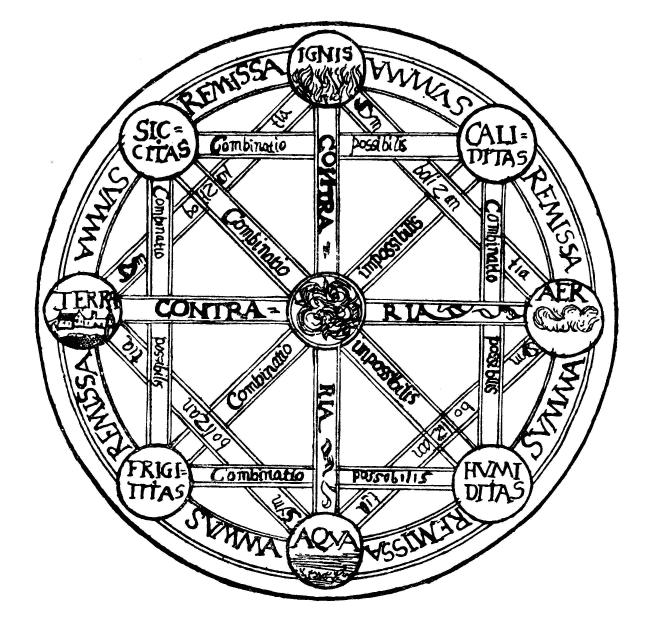
At its most fundamental level, there is no Science to the study of magic. Magic is an Art: this is how the gods set things up before the Slumber, and in a few generations, the repercussions will become cataclysmicly clear. Magic schools do not exist in the categorical “earth, air, fire, water, metal, void” sense, but more as philosophies. Simply put, the better defined the rules of Power are in your mind, the better you can use your power, up to the limits of your body and spirit to handle the forces involved.
As a corollary to this, the mystic arts are not the only way to use power. Sufficient mastery of your weapon will allow one to slice through a tree in one vorpal strike, fire five arrows at once at five different targets, engulf your axe in the flame of your rage, or poke someone in the right nerve cluster and have them collapse immobile with pain.
Furthermore, this is not limited to overt, combat applicable abilities. Old Bob, who has been a conscientious caretaker of his family farm for the last forty years, can soothe his animals such that they never stay sick, never has serious issues with insects or blights in his fields, and enjoys bumper crops every year. Bob sustains his land, and it sustains him. Likewise, Greta the tavern keeper doesn't merely have PS: barmaid at 16-, she's developed bard-like talents to help drive business and keep her patrons in line.
Fortunately, most people are lazy, and do not need to be more than merely competent to get through their daily lives. But Lunistria enjoys an agricultural abundance that is nearly mythic thanks to people like Bob, and famines only happen in the aftermath of cataclysmic environmental events, direct supernatural action, or a war that kills off all the Bobs.
There is a dark side to this arrangement: once or twice a generation in any given region, a pubescent child will suffer an unfortunate confluence of Power awakening, fertile imagination, and aggressive external stress, they they spontaneously do something spectacular in a “magic do as you will” sort of sense. Sometimes, they just turn into a wolf-boy, rip out their uncle's throat while his trousers are around his ankles, and a new Goblin sub-race is born. Most of the time, they simply immolate themselves and their tormentor.
Another effect of this system is that large groups of people believing the same thing tend to influence reality, though usually only in a singular noun sort of way. The emperor of the Uruk Mandarinate is immortal and semi-divine because several million peasants believe it to be true. The dragon slaying sword of Gondor the Magnificent became more and more amazing over the five generations before it went missing because people believed it was the greatest magical weapon of all time.
Some might argue that the holy powers of priests and priestesses are similar: they believe in the rules that underlie their prayers and rituals, and their congregations believe in their holy powers and connections. However, the gods are real, and much of the traditions of the priesthood have been passed down since before the Slumbering.
There are an arbitrarily large number of schools that teach the direct application of magic as magic. The whole wave your hands around, chant in obscure languages, burn rare plants and draw on the floor if you need additional focus types of folks. Each of them teaches a specific way of thinking about magic, though not all of them are mutually exclusive. Prince Imrahil of the Storm Elves is the greatest master of his family's techniques in several generations, but he understands enough Fire magic to light his hearth on a chilly midwinter's morning. Conversely, the Taoist magics of the Uruk Mandarinate completely escape him.
So magic use breaks down into several broad categories:
Sometimes called Clear Magic by frustrated mages. Everyone from Old Bob to Gondor the Magnificent to Jenny the Minstrel and even Ulrich the Werewolf. They are very good at what they do, well past the rational boundaries of mortal skill. The options are limitless, much to the regret of the less dedicated people around you.
As far as the arcanologists can tell, the Gods set up the world with ten fundamental elements that everything is constructed from and uses to keep running smoothly. These are commonly described as Earth, Air, Fire, Water, Metal Wood, Ice, Lightning, Light, and Shadow. Very few magical or philosophical schools address all of them directly, and given the way magic works in Lunistria, that doesn't seem to cause many issues.